
Motion Capture for Humanoid Robots
Teleoperation, Imitation Learning & Ground Truth
Teach humanoids to move, grasp, and balance like humans. Tracklab integrates Xsens full-body inertial capture and MANUS dexterous hand tracking—backed by OptiTrack optical ground truth and Delsys physiological sensors—into turnkey humanoid robotics tracking pipelines across Australia and New Zealand.




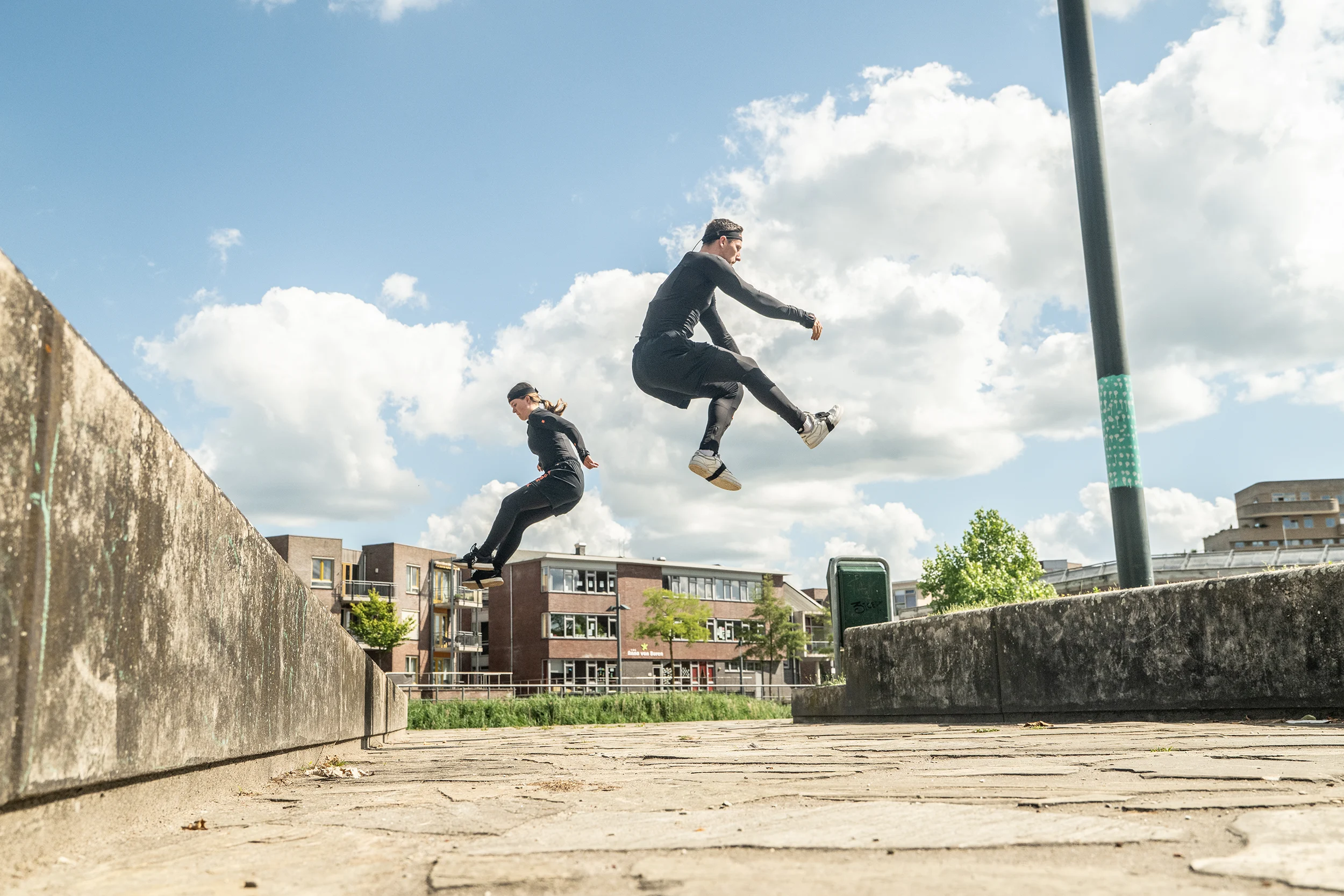
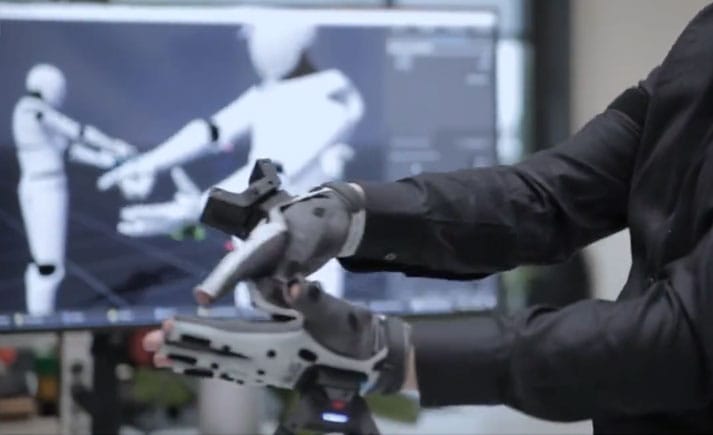
Why Occlusion-Free Motion Capture Drives Humanoid Development
Training modern humanoid robots requires massive, clean datasets of human locomotion and dexterous manipulation—plus reliable real-time teleoperation. Optical-only camera cages struggle the moment an operator crouches, turns away, reaches inside a shelf, or steps outside the lab.
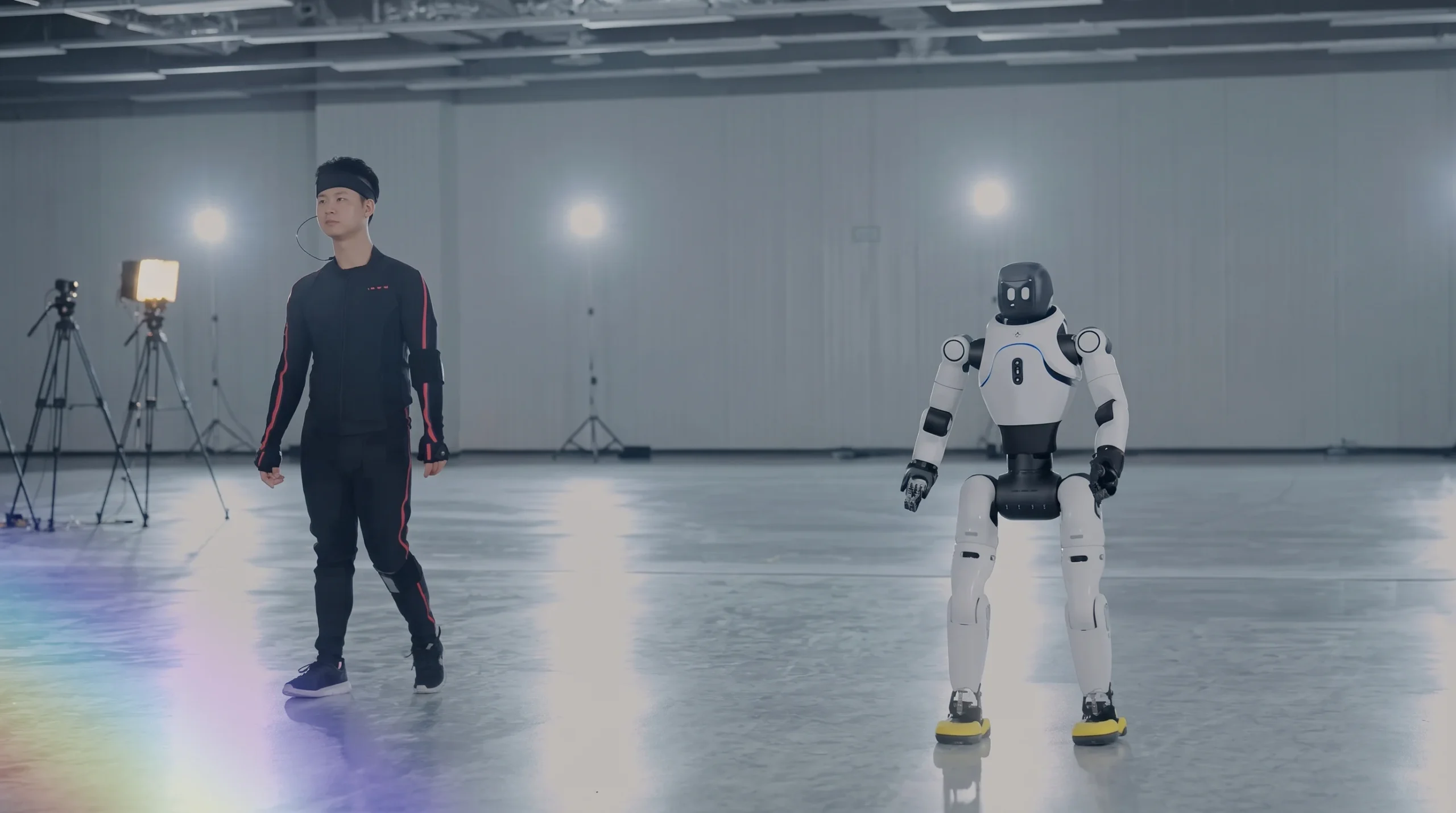
By pairing Xsens full-body inertial suits with MANUS Metagloves, your team captures drift-free, occlusion-free skeletal and finger kinematics in any environment. When your lab also requires sub-millimeter external verification or neuromuscular interaction data, OptiTrack and Delsys plug directly into the same synchronized pipeline.

Occlusion-Free Full-Body & 25-DoF Hand Capture
Record natural walking, stair climbing, and bi-manual grasping without camera line-of-sight constraints.
Real-Time Teleoperation (~20ms Latency)
Stream live human motion into physical humanoids or simulated embodiments in NVIDIA Isaac Sim, MuJoCo, and ROS 2.
One Partner from Training to Deployment
Pair Xsens human motion training suits with Xsens MTi-600 / Avior industrial IMUs (400 Hz) for onboard robot balance and closed-loop gait control.
Purpose-Built Tracking Modalities for Humanoid Development
Xsens Full-Body Motion Capture
Brand & Specialty
Xsens is the global leader in 3D inertial motion capture and industrial sensor fusion, trusted by leading humanoid robotics teams, including: NVIDIA, Meta, Kepler and Ti5 Robotics. Xsens products are used to teach robots how to move and balance like humans. Unlike camera-based optical cages that restrict movement to a calibrated room, Xsens specialises in wearable, magnetic-immune inertial sensor systems that capture studio-grade biomechanical kinematics anywhere.
Why Use Xsens for Humanoid Robotics
For humanoid development, Xsens solves the two biggest bottlenecks in motion training: line-of-sight occlusion and environment constraints. Operators can walk across uneven outdoor terrain, climb stairs, crouch around payloads, or wear overhead safety harnesses without losing a single frame of data. Paired with Xsens Humanoid Live and Humanoid Pro software, teams stream low-latency (~20 ms) skeletal kinematics directly into ROS 2, NVIDIA Isaac Sim, and MuJoCo—and can even carry the same Xsens motion intelligence onto the physical robot using onboard Xsens MTi-600 / Avior industrial IMUs.
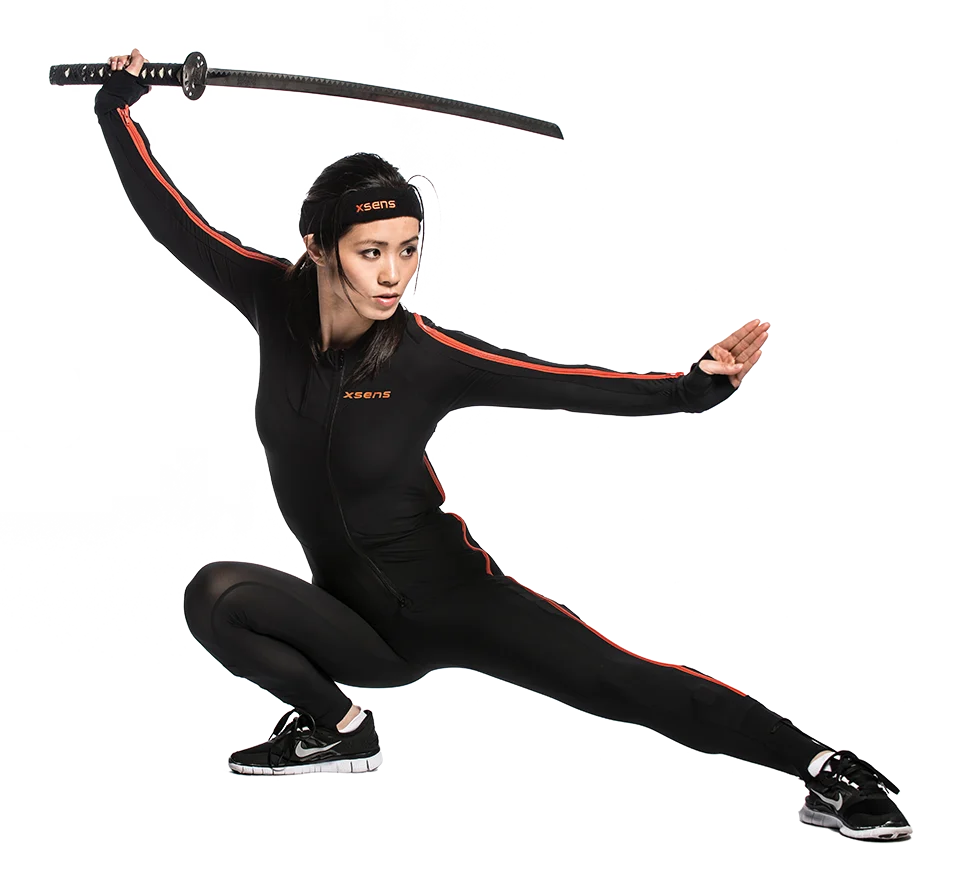
Xsens Link
Using Xsens Link for humanoid robotics to capture studio-grade motion data anywhere with unparalleled freedom and accuracy.View the Xsens Link
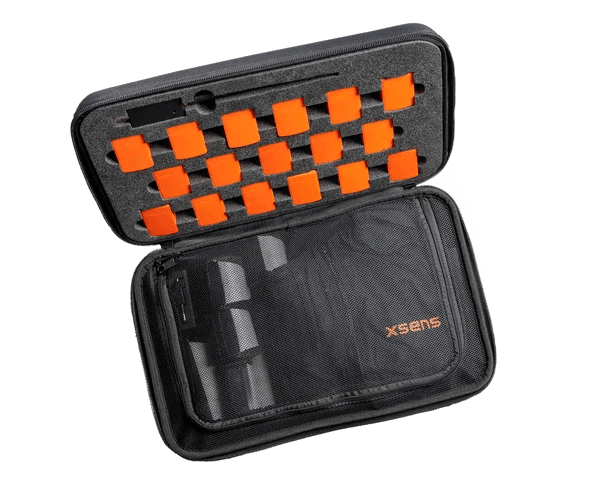
Awinda IMU Suits
With an impressive wireless range of up to 50 meters, the MVN Awinda system offers freedom of movement and can be reliably used in a wide variety of environments and applications.View Awinda IMU Suits
MANUS Dexterous Hand Tracking Gloves
Brand & Specialty
MANUS is the industry benchmark in high-precision finger and hand motion capture for robotics, physical AI, and dexterous teleoperation—proven across more than 50 robotic hand models worldwide and used in leading foundation-model pipelines including NVIDIA EgoScale and RoboBrain-Dex. Unlike camera- or vision-based hand trackers that lose sight of fingers during grasping, MANUS specializes in occlusion-free, drift-free magnetic-induction data gloves that capture every subtle finger articulation in real time.
Why Use MANUS Gloves for Humanoid Robotics
Teaching a humanoid robot to manipulate tools, sort deformable objects, or perform delicate bi-manual tasks requires millimeter-accurate finger telemetry without visual blind spots. When an operator’s hand wraps around an object or reaches inside a workspace, MANUS Metagloves Pro and Pro Haptic maintain uninterrupted 25-DoF anatomical hand tracking—streaming low-latency joint data through MANUS Core into ROS 2, NVIDIA Isaac Teleop, and physical end-effectors like Shadow, Tesollo, Psyonic, and Fourier hands, with optional real-time tactile feedback when contact occurs.
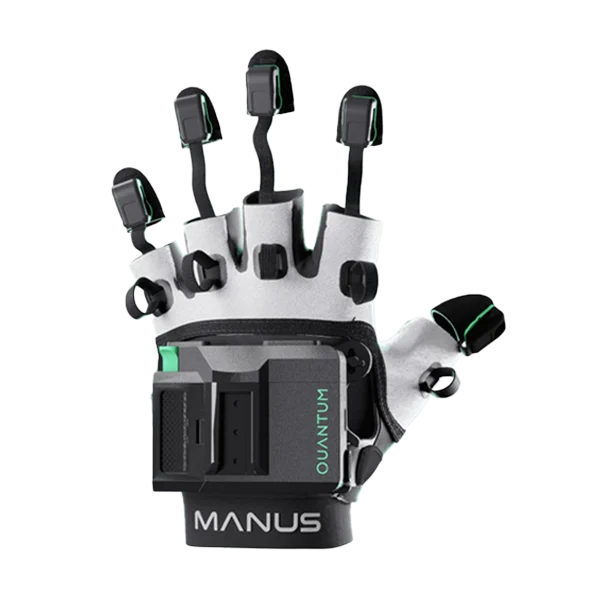
Manus Quantum Meta gloves
Manus’ haptic Manus Quantum Metagloves deliver sub-millimeter precision hand tracking and lifelike tactile feedback, revolutionising robotics training.View the Quantum Meta gloves
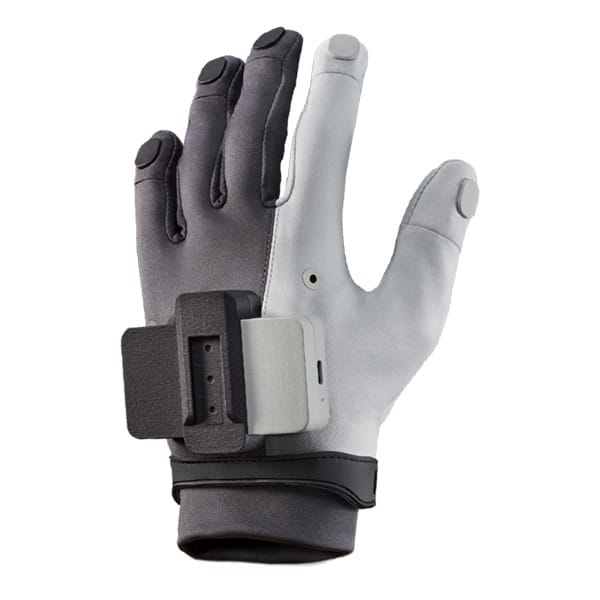
Manus Meta gloves Pro
Experience the future of motion capture with unparalleled precision and a workflow designed for professionals.View the Manus Meta gloves Pro
OptiTrack PrimeX Optical Series
Brand & Specialty
OptiTrack is the global standard in high-speed, sub-millimeter optical tracking, trusted by leading robotics laboratories, aerospace test facilities, and autonomous systems teams worldwide for absolute external ground truth. Unlike wearable inertial sensors that measure relative joint angles, OptiTrack specialises in multi-camera infrared metrology that tracks rigid bodies, limb segments, and end-effectors within a fixed global coordinate frame down to < 0.1 mm 3D precision.
Why Use OptiTrack for Humanoid Robotics
While Xsens and MANUS drive scalable, occlusion-free teleoperation and imitation learning, engineering teams turn to OptiTrack when they need objective lab-grade ground truth to verify physical humanoid performance. Onboard joint encoders and embedded IMUs cannot detect foot slip against the floor, gear backlash, or carbon-fiber limb deflection during high-impact foot strikes. OptiTrack’s PrimeX camera arrays capture high-frequency dynamic transients at 240–360+ FPS—streaming ultra-low-latency (< 4.2 ms) 6DoF pose data into ROS 2, MATLAB, and NVIDIA Isaac Sim to benchmark state estimators, validate push-recovery controllers, and certify sim-to-real accuracy.
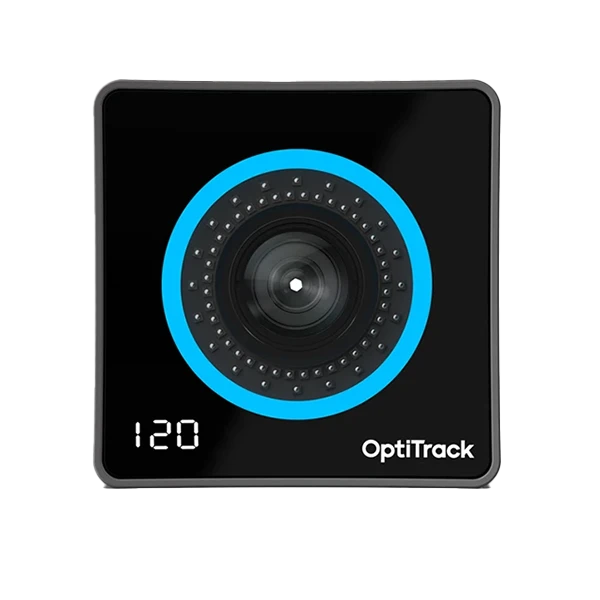
OptiTrack PrimeX Optical Series
The OptiTrack Prime Range user-friendly design allows for rapid deployment and comfortable extended use.View now
Delsys Trigno Wireless EMG & Biosensing Systems
Brand & Specialty
Delsys is the global leader in wireless electromyography (EMG) and physiological sensing for biomechanics, rehabilitation robotics, and human-machine interfaces. Unlike pure kinematic trackers that only measure how a limb moves through space, Delsys specializes in high-fidelity wireless surface EMG (sEMG) and integrated IMU sensors that capture neuromuscular activation and muscle force generation directly at the source.
Why Use Delsys for Humanoid Robotics
Building safe, compliant humanoid robots that work alongside people requires understanding human physical intent—not just joint positions. By synchronizing Delsys Trigno wireless EMG sensors and Trigno Link with Xsens and OptiTrack kinematic streams, robotics teams can decode grasp stiffness, operator muscle fatigue, and neurological intent milliseconds before overt physical motion occurs. This neuromuscular telemetry helps engineers train variable-impedance grasping policies, benchmark physical human-robot interaction (pHRI) safety, and refine intuitive teleoperation interfaces.
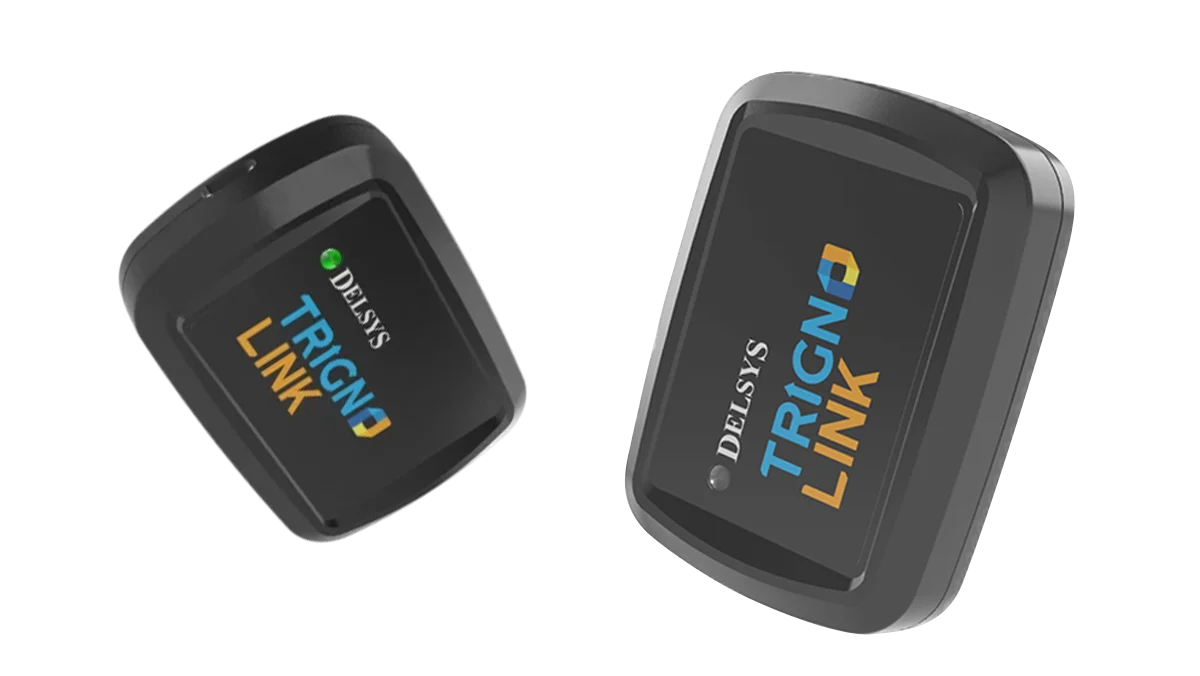
Delsys Trigno Link
You can seamlessly synchronize high-fidelity wireless EMG with a full spectrum of physiological sensorsDelsys Trigno Link consultation
Frequently Asked Questions for Motion Capture for Humanoid Robots
Onboard joint encoders only measure relative angle between links—they cannot detect structural flexion, gear backlash, or foot slip against the ground. Embedded IMUs drift over time and struggle during high-frequency foot-strike impacts. External optical motion capture provides an absolute global coordinate system with sub-millimeter precision, allowing you to accurately benchmark state estimators and calculate true center-of-mass positions.
Bipedal platforms create frequent self-occlusions as limbs cross or interact with payloads. We solve this by:
- Supplementing optical systems with wearable IMUs (Xsens) for continuous kinematic continuity regardless of line-of-sight.
- Designing redundant multi-camera arrays (typically 8 to 24+ cameras) providing continuous multi-angle coverage.
- Utilizing Active LED continuous-ID markers, which pulse unique infrared signatures so cameras never lose track of a marker identity even when briefly occluded.
Yes. Tracklab systems provide low-latency Python APIs, C++ SDKs, and ROS 2 bridges that feed directly into physics simulators such as NVIDIA Isaac Sim, MuJoCo, and PyBullet. This allows researchers to capture real human motor trajectories and directly retarget them into virtual humanoid policy networks for reinforcement learning and sim-to-real transfer.
Yes. The software architecture supports simultaneous multi-body tracking. A human operator wearing an optical suit or sensorized gloves can be tracked in the exact same physical and spatial coordinate frame as the humanoid robot, which is ideal for real-time teleoperation, leader-follower trials, and collaborative ergonomics studies.
Build Your Humanoid Robotics Tracking Testbed
Whether you are designing a dynamic walking arena, instrumenting a high-speed perturbation treadmill, or capturing rich human imitation learning datasets, Tracklab’s Melbourne-based engineering team delivers turnkey tracking solutions tailored to your lab’s footprint and dynamic performance requirements.
Talk to an expert today, just call 03 7018 2121 or email us at info@tracklab.com.au.